
Writing Effective Learning Outcomes
One of the most important steps in the assessment process is determining meaningful course learning outcomes (CLOs). Without appropriate CLOs, it is difficult, if not impossible, to collect relevant or equitable information about student learning that can be used for instructional and program improvement.
CLOs typically concern three broad types of student learning:
CLOs should be
When writing CLOs, it is easy to fall into the Goldilocks trap; we want to steer away from outcomes that are too broad to be measurable or too narrow to fit coherently into the program goals. Creating great CLOs can be challenging, but it gets easier with practice and never be afraid to ask for examples from past iterations of the course.
Measurable and Actionable
When we talk about Outcomes being measurable and actionable, what does that actually mean? When we design outcomes, we need to be purposeful in the action verbs that we use, to ensure that what we are requiring is an accurate representation of necessary skills–and also appropriate to the academic level that our learners are at right now. Bloom’s taxonomy can be a helpful tool for framing your outcomes statements. Typically, it is shown in a pyramid format, although Benjamin Bloom never designed it that way!
The image below (click to zoom in) shows the taxonomy in a star formation with spirals through the levels. This is actually how we typically learn content. We need multiple exposures at various levels of depth to really learn knowledge, skills, and dispositions.
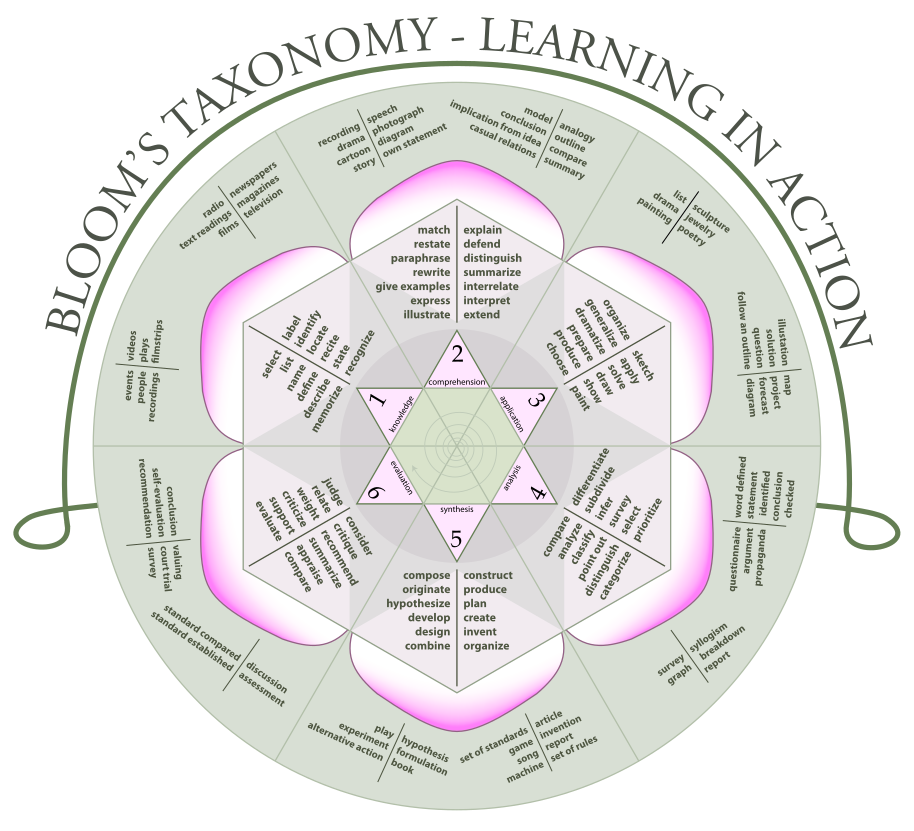
UMPI Learning Outcome Language
How to Develop Great Outcomes
- Determine existing outcomes. Ask your program coordinator: “Does my course have GLOs or PLOs associated with it”, and “Does it have existing CLOs”?
- Consider the end game. What, specifically do student who have taken this class need to know, and be able to do by the end of the class
- Make it Measurable. Assess your outcome language, is it measurable? How will you know students have met the outcome? How will students know they have met the outcome?
Behavioral Objectives
Behavioral objectives include a performance, a condition, and criterion. Watch this video for an explanation. This format can really help to make your learning outcomes observable, measurable, and actionable.
Goal, Outcome, or Objective?
At UMPI, faculty work hard to work through the process of creating transparent, measurable outcomes that clearly let the students know what is expected of them. You may have seen the terms outcomes, goals, and objectives used interchangeably–but at UMPI the terms are used very specifically. Check out this brief intro:
Ready to Revise?
This short video walks you through a sociology professor revising his learning outcomes to be more observable and measurable.
Fink’s Taxonomy of Significant Learning
Faculty at UMPI care about more than just delivering their course content. They want to make an impact on student lives and help them grow a love for their discipline. Fink’s taxonomy of significant learning includes the foundational knowledge and application levels that you will find in Bloom’s taxonomy, but he goes on to describe additional categories:
- Integration: making connections between ideas especially beyond the walls of the classroom and between school and life.
- Human dimension: how the course content relates to and impacts humans.
- Caring: developing an interest or value for the course content.
- Learning how to learn: building the skills to continue learning more about the course content beyond the course.
| Category | Definition | Actions |
|---|---|---|
| Foundational Knowledge | Recall and demonstrate understanding of information and ideas. | Remember · Recall · Identify · Explain · Predict · Describe · Define · Summarize · Recognize · Arrange · Indicate · Classify |
| Application | Demonstrate skills. Engage in critical, practical and creative thinking. | Use · Critique · Manage · Solve · Assess · Judge · Do [skill] · Imagine · Analyze · Calculate · Coordinate · Communicate |
| Integration | Perceive connections between ideas, experiences, disciplines and realms of life. | Connect · Identify the interaction between · Relate · Compare · Contrast · Integrate · Identify the similarities between · Determine the cause |
| Human Dimension | Gaining a new understanding of themselves and others. Determine personal and social implications. | Interact with others · Compare viewpoint · Discuss (world events) · Identify the impact · Plan (a change) · Determine (why actions occurred) · Advocate · Collaborate · Support · Resolve · Share |
| Caring | Acquire new interests, feeling or values about what they are learning. | Get excited about · Prepare to · Increase interest · Value · Reflect · Change · Adjust (beliefs) · Commit · Develop (a plan) · Explore · Express · Pledge |
| Learning How to Learn | Learning about the process of their particular learning and learning in general. | Develop (a plan) · Identify resources · Construct knowledge about · Frame useful questions · Analyze · Inquire · Reflect · Research · Self-assess · Self-monitor |
Adapted from Fink, L. D. (2013). Creating Significant Learning Experiences: An Integrated Approach to Designing College Courses. San Francisco: Jossey-Bass.