
At the University of Maine at Presque Isle, we are committed to providing a student-centered learning experience. To support this mission, campus and academic leadership—guided by industry standards and student input—have developed a Common Syllabus template. We also participate in the UMS system-wide initiative to provide dependable, easy-to-access tools in the Learning Management System across courses and institutions. Together, these efforts streamline student navigation and create a more coherent, unified, and equitable learning experience.
Less Cognitive Load, More Course-Specific Learning
You want your learners to identify the most important aspects of your course, not spend time trying to find this information. Cognitive load theory was used to simplify the syllabus format and interface so students can immediately recognize what is unique about your course.
Cognitive load theory is based on information processing research, which has shown that our short-term memory (an essential steppingstone to long-term memory) is only able to juggle a limited number of elements at one time.
By creating dependable pathways to information, we are able to ‘cut out’ the cognitive processing of ‘looking for’, ‘trying to find’, and ‘where do I’ activities (and the accompanying anxiety of any inability to find needed information), so that students can devote more cognitive function to engaging with learning activities.
Building a common pathway while supporting academic autonomy in content design & delivery
We take pride in the talent, resources, and innovation our faculty bring to campus, and we are passionate about helping students engage more directly with course content. The learner-centered syllabus template makes it easier for students to quickly locate essential information they need to succeed across classes and disciplines. This allows them to devote more of their time and energy to learning—rather than searching for where to find key elements in a syllabus or Brightspace site. Think of the Common Syllabus as a consistent road map: while the destinations (our courses) are varied and diverse, the pathways and signposts guiding students from start to graduation remain clear and reliable.
How this translates within the learning platform (Brightspace)
We support consistency and streamline tool access in Brightspace in two key ways. First, we use the Syllabus Page to provide a central space where faculty can post essential contact information, course expectations, and the syllabus itself. Second, we maintain a common NavBar across all Brightspace courses. This shared navigation menu links to frequently used tools, campus policies, and learner support options.
The common NavBar allows faculty to focus their course modules on content and learning pathways rather than tool access, student resources, or policy updates. For students, this consistency means they always know where to find course tools, resources, and guidelines—across classes, disciplines, and even institutions.
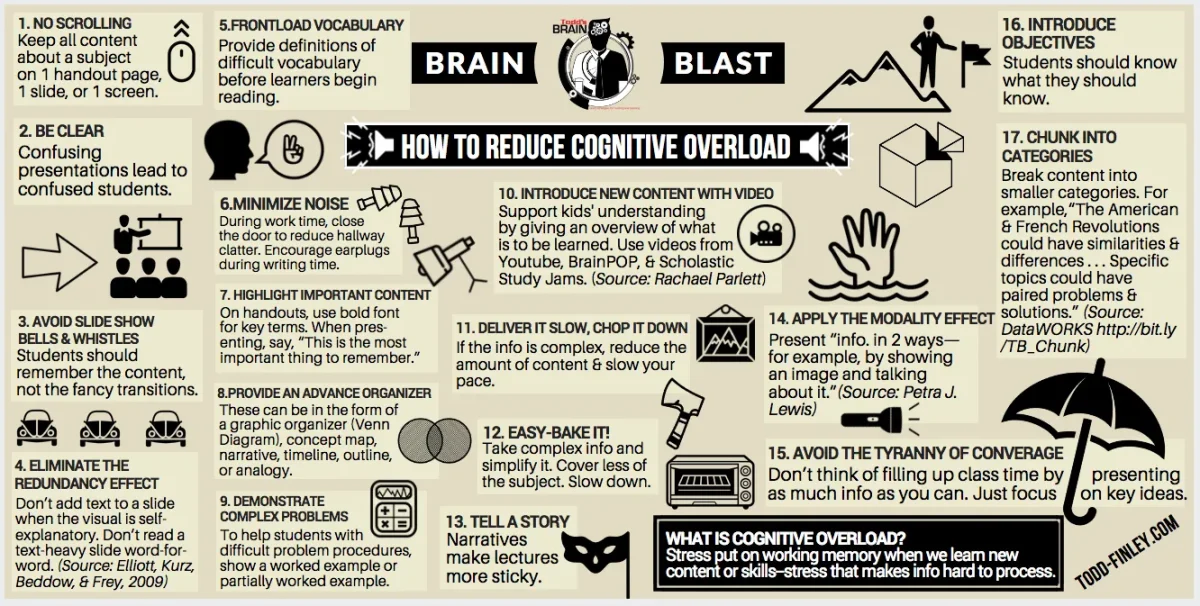
Listen to Todd Finley describe 5 Ways to Overcome Cognitive Load on the 10 Minute Teacher podcast.