
The Faculty Learning Community at UMPI was developed to provide support for faculty to conduct scholarly inquiry into their teaching activities. New members are welcome to join at any time, but for the best experience, plan to join at the beginning of the semester and work on a project throughout the year.
FLC Defined
A faculty learning community (FLC) is a specifically structured learning community of faculty and staff in higher education that includes the goals of building community, engaging in scholarly practice, and developing the scholarship of teaching and learning (SoTL). Miami U
What is the Scholarship of Teaching & Learning?
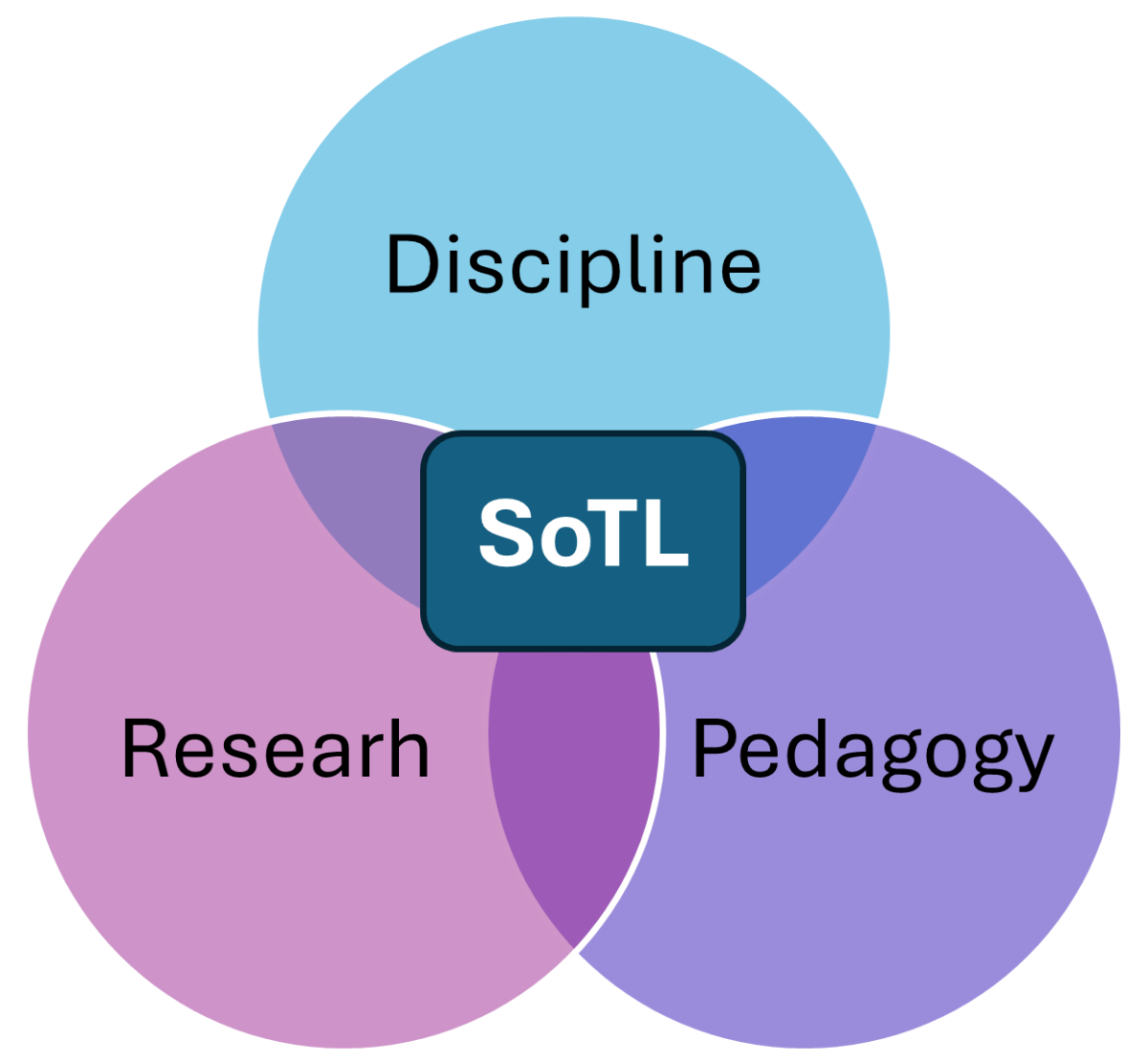
The Scholarship of Teaching and Learning (SoTL) is a rigorous, reflective, and evidence‑based approach to understanding how students learn. While scholarly or reflective teaching draws on existing research to inform classroom practices, SoTL goes further by treating classroom teaching as a subject of academic inquiry—posing pedagogical questions, collecting and analyzing data, and sharing findings publicly in peer‑reviewed formats. This systematic, transparent process helps build a cumulative body of knowledge that fosters continuous improvement in teaching and elevates pedagogy to the levels of scholarly discourse.
Historical Context & Why It Matters
The movement toward SoTL was catalyzed by Ernest Boyer’s influential Scholarship Reconsidered (1990), which advocated broadening the notion of academic scholarship to include teaching as a form of rigorous inquiry. Over time, scholars such as Lee Shulman emphasized that SoTL helps break the “pedagogical solitude” that many educators experience, promoting a shared, reflective, and impactful teaching community. Today, SoTL is widely recognized across institutions as integral to enhancing both teaching practice and student learning outcomes.
How is SoTL Practiced Today?
Modern SoTL efforts are intentionally multidisciplinary and methodologically diverse. Practitioners frame their inquiries around questions such as “What works?”, “What is?”, or “What could be possible?”—ranging from evaluating the effectiveness of pedagogy to exploring student experiences or imagining new educational models. Projects often integrate both qualitative and quantitative methods, are grounded in educational theory and discipline‑specific contexts, and involve students as collaborators or partners. Results are shared via teaching centers, conferences like ISSOTL and Lilly, and peer‑reviewed journals tailored to SoTL and specific disciplines.
Why join the Faculty Learning Community?
Engaging in SoTL through a Faculty Learning Community offers numerous benefits:
- Collaborative support: Faculty share ideas, co-design projects, and provide mutual feedback—mitigating isolation and enriching work with diverse perspectives.
- Structured guidance: FLCs often include workshops, mentoring, and resources to help you frame questions, design studies, navigate IRB procedures, and publish results.
- Scholarly recognition: SoTL outputs such as conference presentations or journal articles contribute to teaching portfolios, tenure reviews, and institutional teaching excellence initiatives.
- Impact on learning and community: You refine your teaching, learn more deeply about student learning, and contribute to a growing, evidence‑informed teaching culture across disciplines.
Joining an FLC offers a low‑stakes, collegial environment to explore teaching questions, deepen one’s inquiry skills, and initiate meaningful contributions to both pedagogy and scholarship. The time commitment for UMPI’s FLC is two hours twice monthly throughout the academic year. This includes time spent learning about SoTL in your discipline, brainstorming ideas with other faculty and CTL staff, talking to guest speakers who engage in SoTL, and working on your own SoTL research project with support.
Learn More About SoTL
1. Foundational SoTL Guides & Communities
- Vanderbilt SoTL Guide – A practical, layered web guide walking faculty through understanding and conducting SoTL.
- University of Calgary Taylor Institute – Offers a step‑by‑step module on designing a SoTL project, including guides like the Utrecht Roadmap and “Hopscotch Model”.
- Tufts University Getting Started with SoTL – Focuses on framing research questions, reviewing literature, designing studies, and addressing ethics and IRBs.
2. Professional Societies & Journals
- International Society for the Scholarship of Teaching & Learning (ISSOTL) – The premier global network hosting conferences, a journal (Teaching & Learning Inquiry), blogs, and collaborative writing groups.
- Discipline‑Specific SoTL and DBER Journals – Including CBE—Life Sciences Education, Computer Science Education, Physics Teacher, among many others.
- Multi‑disciplinary SoTL Journals – Such as International Journal for the Scholarship of Teaching and Learning, Teaching and Learning Inquiry, Change, and more.
3. Institutional Project Support & Ethical Guidance
- Illinois State SoTL Materials & Tutorials – Annotated bibliographies, videos, podcasts, and project design tips for SoTL newcomers.
- West Chester University SoTL Guide – Offers a detailed, step‑wise walk‑through of SoTL methods, ethical considerations, and community connections.